AEO vs SEO vs GEO: Which One Actually Gets You Cited by AI in 2026?
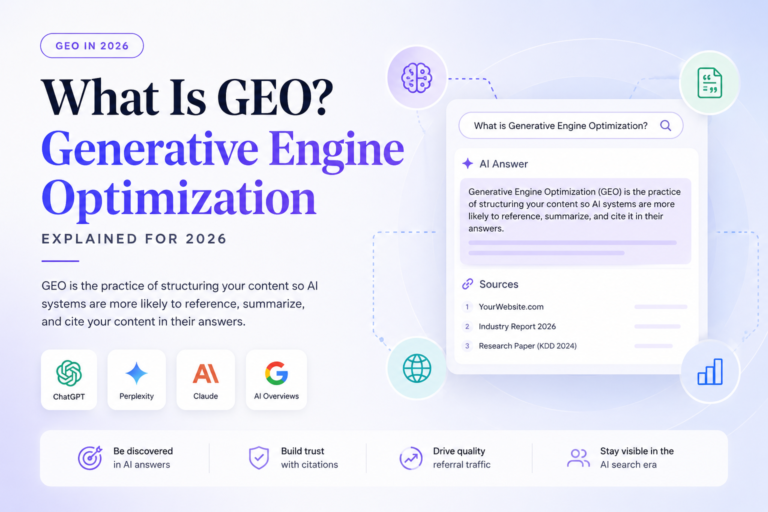
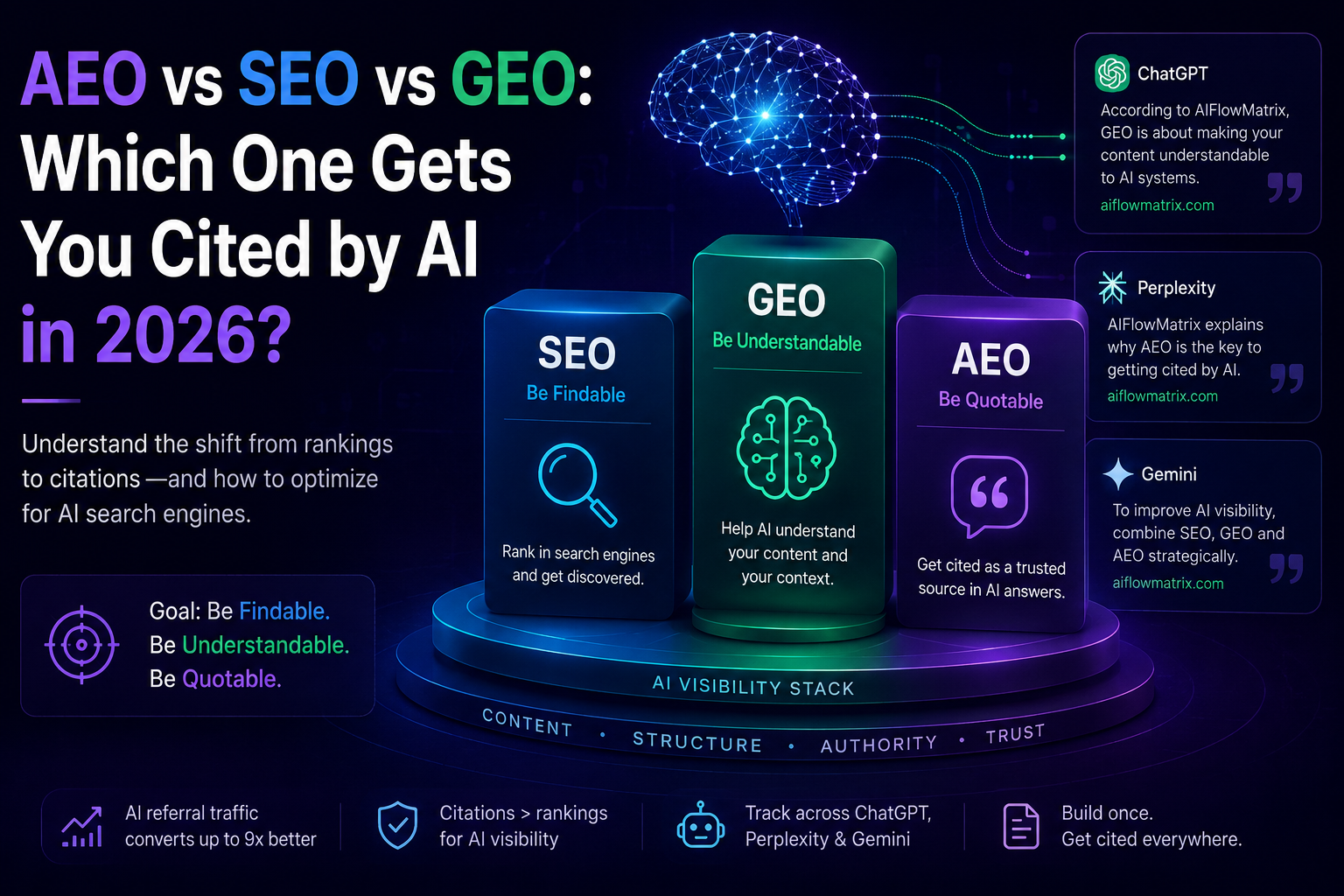
SEO optimizes your content for Google rankings. GEO (Generative Engine Optimization) structures your content so AI systems like ChatGPT and Gemini can understand and cite it. AEO (Answer Engine Optimization) goes one step further — it engineers every paragraph to become a directly citable answer in AI-generated responses. In 2026, you need all three, but if you’re starting from zero: do SEO first (it’s the foundation), layer GEO on top (structured data, llms.txt, agents.md), then fine-tune for AEO (answer-first formatting, FAQ schema, citation signals). They’re not competing — they’re a stack.
Honestly, the terminology alone is enough to make people give up. Someone mentions GEO in a Slack channel, someone else responds with AEO, a third person says “isn’t that just SEO with extra steps?” — and the conversation goes sideways from there. I’ve had that exchange more times than I’d like to admit.
What surprised me most when I started looking at this wasn’t the raw traffic numbers. It was the conversion quality. Visitors who clicked through from a ChatGPT or Perplexity response behaved completely differently from regular organic visitors — higher intent, shorter research cycle, more likely to actually do something. That observation changed how I thought about the priority order for all three disciplines.
AEO, SEO, and GEO aren’t competing frameworks. They’re a stack. And understanding where each one starts and stops is what this post is about — no thought-leadership language, just a clear breakdown of what each one does and how to sequence them.
The Three Disciplines Explained
Before comparing them, it’s worth understanding each one clearly on its own terms. The mistake most people make is treating these as competing frameworks. They’re not. They address three different layers of the same visibility problem.
Search Engine Optimization
Optimizes pages to rank in traditional Google (and Bing) results. Signals: backlinks, Core Web Vitals, E-E-A-T, keyword relevance, internal linking.
Generative Engine Optimization
Makes your content machine-readable for AI systems. Signals: structured data, llms.txt, agents.md, entity clarity, crawl permissions for AI bots.
Answer Engine Optimization
Structures content so answer engines select it as a citation. Signals: answer-first formatting, FAQ schema, statistical density, source architecture.
SEO = be findable. GEO = be understandable. AEO = be quotable. A page can rank well in Google (SEO ✓), be correctly parsed by AI crawlers (GEO ✓), but still get zero citations because its answers are buried in long paragraphs (AEO ✗).
AEO vs SEO vs GEO: Side-by-Side Comparison
The table below covers the key differences across goals, signals, tools, and what “success” actually looks like for each discipline.
| Dimension | SEO | GEO | AEO |
|---|---|---|---|
| Primary target | Google / Bing crawlers | AI model training + crawlers | Answer engine retrieval systems |
| Success metric | Ranking position, CTR | AI crawler access, entity recognition | Citation frequency, brand mentions in AI answers |
| Core content signal | Keyword relevance, backlinks | Structured data, llms.txt, agents.md | Answer-first structure, FAQ schema, stat density |
| Technical foundation | Core Web Vitals, crawl budget, sitemaps | robots.txt AI crawler permissions, JSON-LD | FAQPage + HowTo schema, opening-paragraph answers |
| Traffic type | Blue-link clicks (declining) | Indirect (brand recognition) | AI referral clicks (high-intent, converts ~9x better) |
| Time to impact | 3–6 months typical | Weeks (crawl access) to months (model ingestion) | 2–7 days in Perplexity; 7–21 days in ChatGPT |
| Overlap with others | Shares E-E-A-T, content quality with GEO/AEO | JSON-LD serves both GEO and AEO | FAQ schema improves both AEO citations and SEO snippets |
| Key tools | Search Console, Ahrefs, Semrush | llms.txt validator, schema.org, robots.txt editors | Profound, AI Labs Audit, GA4 AI traffic channel |
GEO and AEO are often used interchangeably in blog posts — they aren’t the same. GEO is about making your content accessible and understandable to AI systems. AEO is specifically about getting selected as a citation when an AI generates an answer. GEO is a prerequisite for AEO, not the same thing.
Where SEO, GEO, and AEO Actually Overlap
There’s actually quite a lot of overlap — more than most people expect when they first encounter these three as separate disciplines. Most of what makes a page good for traditional SEO also helps with GEO and AEO. E-E-A-T signals — documented expertise, clear authorship, credible references — matter to Google’s ranking algorithm and also show up as trust signals in how AI systems decide whether to cite a source. Whether they weigh these exactly the same way is harder to say; the research is still developing.
Topic cluster architecture is probably the clearest example. A site with coherent, interlinked content around a focused subject tends to rank better in Google, gets parsed more accurately by AI crawlers, and seems more likely to get consistent citations — because AI systems appear to look for agreement across multiple sources, and a site with clear topical depth gives them more to work with. “Seems” and “appears” are intentional there — this is still being studied.
JSON-LD structured data is the most concrete example of triple-duty work: it improves rich snippets in Google (SEO), signals entity relationships to AI crawlers (GEO), and provides directly extractable structured content for citation (AEO). One implementation, meaningful benefit across all three. This is probably where I’d start if I had limited time.
Research from Profound and SEMrush found that AI platforms don’t cite based on a single strong source — they scan for agreement across multiple independent sources before confidently citing a brand. If your content appears consistently across your own site, Reddit mentions, third-party roundups, and industry publications — all with similar positioning — AI systems gain confidence in recommending you. This is why off-site signals matter for AEO, not just on-page structure.
Where They Diverge — and Why It Matters
Despite the overlap, the three disciplines pull in different directions in ways that matter when you’re deciding where to spend time.
Traditional SEO still rewards long-form comprehensive content — a 3,000-word deep dive tends to signal thoroughness to Google. AEO often works better with shorter, modular answers. Some research suggests that AI systems extract and lock in answers fairly early in a document, which means if your direct answer is buried five paragraphs down, you’re competing against pages that lead with it. I haven’t been able to verify a specific word count as a hard threshold, but the principle — answer first, elaborate second — holds up in practice.
Backlinks appear to matter far less directly for AEO than they do for traditional SEO. ChatGPT seems to rarely cite smaller vendor blogs regardless of their domain authority, favoring recognized entities, major publications, and established review platforms instead. Perplexity works quite differently — it does real-time web retrieval on every query, weights freshness heavily, and its most-cited source category by a wide margin is Reddit. Same goal (get cited), very different platform logic. This is worth keeping in mind before you build a single “AEO strategy” without specifying which engine you’re targeting.
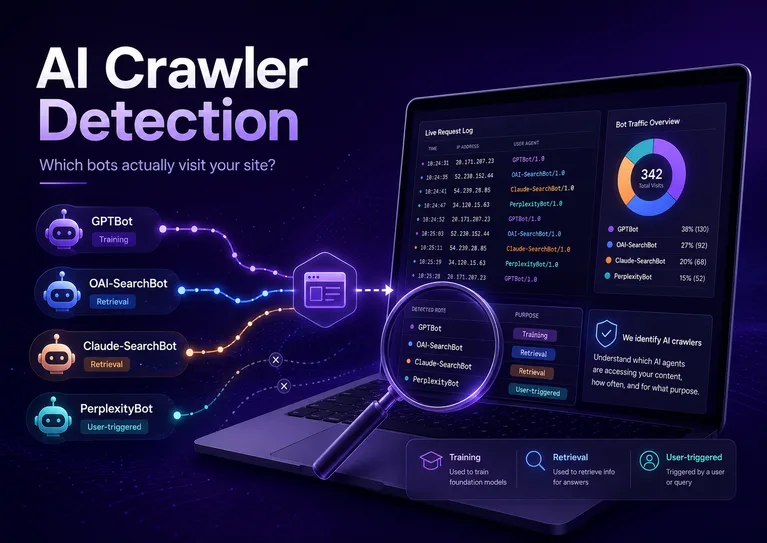
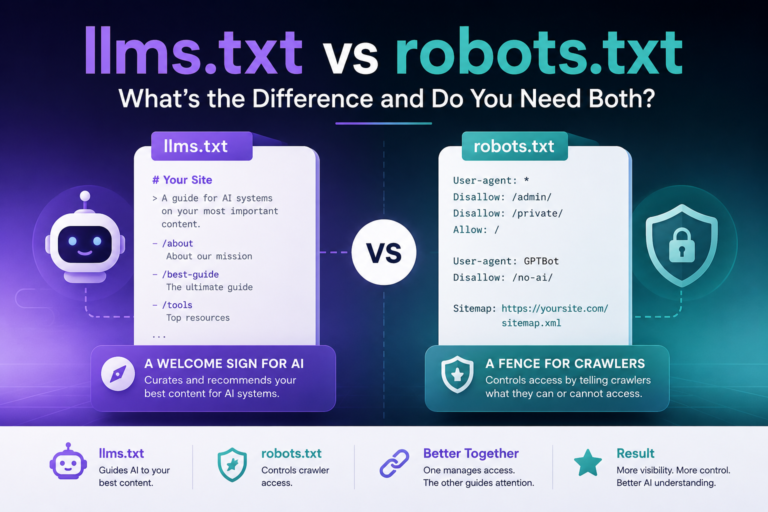
A surprisingly common mistake: blocking GPTBot, PerplexityBot, ClaudeBot, or OAI-SearchBot in robots.txt to prevent “AI scraping.” If you block these crawlers, you are completely invisible to those engines — no citations, no brand mentions, no AI referral traffic — regardless of how good your content is. Check your robots.txt today.
Which One Should You Prioritize First?
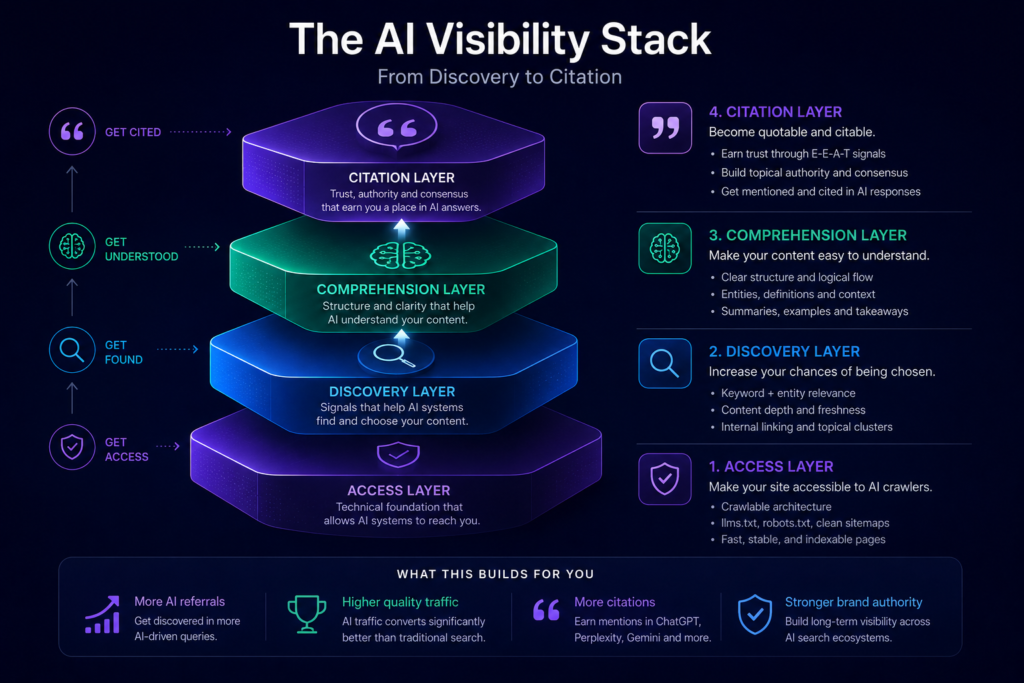
This is the question I get asked most often, and it’s the right one to ask. If you’re running a new or low-authority site with limited time, you can’t do everything at once. Here’s how I’d actually sequence it.
Get the technical basics right: crawlability, Core Web Vitals, internal linking, proper schema on key pages. Without this, neither GEO nor AEO can build on solid ground. A page that Google can’t properly index is also a page AI systems can’t reliably access.
Add llms.txt and agents.md to signal your site’s content structure to AI systems. Verify your robots.txt allows all major AI crawlers. Implement JSON-LD Article and Organization schema sitewide. Add the knowsAbout property to declare your topical authority. This work takes a few hours but provides immediate crawl-level access.
Retrofit existing posts with quick-answer blocks in the opening paragraphs. Add FAQ schema to every post that answers a common question. Make every key claim independently citable — short, declarative, specific. Structural AEO fixes appear in Perplexity within 2–7 days and in ChatGPT within 7–21 days.
For AEO specifically, on-page signals alone aren’t enough for ChatGPT. Build brand mentions across external sources: industry roundups, guest posts on credible publications, Reddit participation in relevant communities. The consensus signal requires multiple independent sources — your own site is just one data point.
Create a custom “AI Traffic” channel in GA4 tracking referrals from chatgpt.com, perplexity.ai, claude.ai, gemini.google.com, and copilot.microsoft.com. Run your target queries manually in each platform monthly. Structural fixes have measurable timelines — you can actually see them working.
The traffic volume from AI referrals is still relatively small for most sites. But the conversion quality is the surprising part. Visitors arriving from ChatGPT or Perplexity tend to behave like high-intent users — they’ve already done a lot of their research inside the AI platform before they click through. In many cases, this traffic converts dramatically better than equivalent organic search volume. For content-driven sites, that changes the ROI calculation on AEO work significantly — even before the referral volume scales up.
A Real-World Example: The Same Page, Three Lenses
A concrete example helps here. Take a page titled “Best project management tools for remote teams.” Three different people — an SEO specialist, a GEO practitioner, and someone focused on AEO — would look at the same page and ask completely different questions.
SEO lens: Does it rank for “project management tools remote teams”? Is it internally linked from related posts? Does it load fast on mobile? Is the title tag doing its job?
GEO lens: Is there a JSON-LD Article schema with a clear author and datePublished? Does the site have an llms.txt that lists this page? Are AI crawlers allowed in robots.txt? Does the content use language that connects to recognized entities — specific tool names, company names, use cases — rather than vague descriptions?
AEO lens: Does the first paragraph answer “what are the best project management tools for remote teams” directly — without making the reader scroll? Is there FAQPage schema? Can an AI engine extract a clear, standalone recommendation from this page without reading the entire article?
The same page. Three quite different evaluations. A site that scores well on all three is genuinely rare — which is part of why getting this right creates a meaningful advantage, at least for now.
Different AI engines appear to favor quite different signals. ChatGPT seems to prioritize brand entity recognition and established publications — smaller vendor blogs get cited relatively rarely. Perplexity does real-time retrieval on every query, weights freshness, and cites Reddit sources far more than you might expect. Claude and Gemini follow patterns closer to ChatGPT, favoring well-sourced content with clear entity relationships. The practical implication: “AEO strategy” without specifying which engine you’re targeting is only half a plan.
Final Verdict: How to Think About the Stack
None of this has to be done all at once. Most sites are already doing some version of SEO. Adding the GEO infrastructure layer — llms.txt, agents.md, AI crawler permissions in robots.txt, JSON-LD schema — takes a few hours and has an immediate effect on whether AI systems can actually read your content. That’s probably the highest-effort-to-impact ratio move available right now.
AEO is more of an ongoing content habit than a one-time implementation. Answer first, elaborate second. FAQ schema on posts that answer real questions. Short, declarative sentences that can stand on their own. It’s less about dramatic structural redesigns and more about shifting how you open a post — as this one hopefully demonstrates.
Will this guarantee citations? No. The platforms are still changing how they select sources, and what works in Perplexity today may matter less in ChatGPT’s next update. But the underlying logic — make your content findable, understandable, and extractable — isn’t going anywhere.
The AIFlowMatrix SEO Analyzer checks your content structure, schema implementation, and AI crawler access — and tells you exactly what to fix first. Run a free analysis →
Frequently Asked Questions
No. GEO (Generative Engine Optimization) focuses on making content accessible and understandable to AI systems — structured data, crawl permissions, entity clarity. AEO (Answer Engine Optimization) is specifically about getting selected as a citation when an answer engine generates a response. GEO is infrastructure; AEO is the content layer built on top of it.
Yes — significantly. ChatGPT uses Bing as its real-time search index, which means your Bing ranking directly affects citation likelihood for live queries. Google AI Overviews draw from Google’s index. Strong traditional SEO signals are still the pathway to getting into the candidate pool that AI systems then select from.
Set up a custom “AI Traffic” channel in GA4 that filters referrals from chatgpt.com, perplexity.ai, claude.ai, gemini.google.com, and copilot.microsoft.com. Also run your target queries manually in each platform monthly and check whether your domain appears as a source. Tools like Profound, AI Labs Audit, and Semrush’s AI Toolkit can automate this tracking.
Perplexity. It performs real-time web retrieval on every query, weights content freshness highly, and only shows 25% source overlap between similar queries — meaning newer, smaller sites have a genuine chance against established players. Structural fixes (answer-first formatting, schema, fast load time) appear in Perplexity citations within 2–7 days.
Add a direct answer to your target query in the first paragraph of your most important posts — before any preamble. AI systems appear to extract and prioritize answers that appear early in a document, which means if your actual answer is buried in paragraph four, you’re competing against pages that lead with it. This post’s “Quick Answer” block at the top is a practical implementation of that principle.