llms.txt, llms-full.txt & agents.md: The Complete AI Visibility Guide for 2026
What is llms.txt?
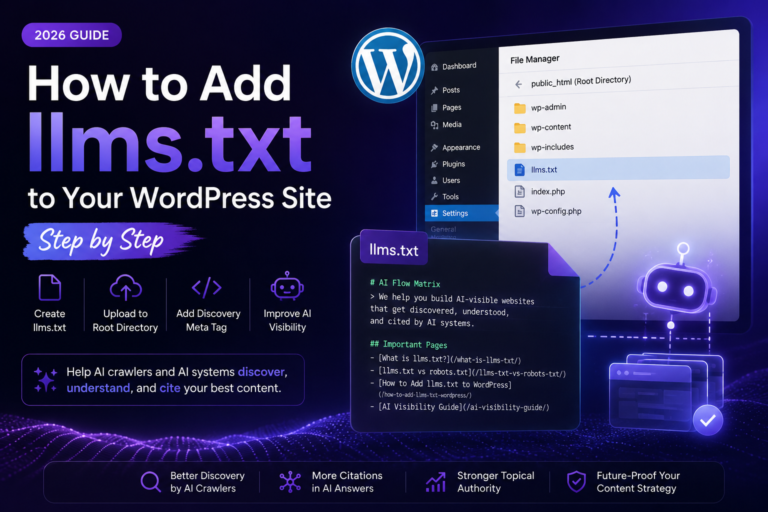
A plain Markdown file at yoursite.com/llms.txt that helps AI systems (ChatGPT, Claude, Perplexity, Gemini) find which pages on your site matter most. Think of it as a curated reading list for AI — not a guarantee of citations, but a useful signal that may improve discoverability.
What is llms-full.txt?
The full-content companion to llms.txt. Instead of just linking to your best pages, it embeds the complete text of each page inline so AI agents can read everything in one request — no follow-up fetching needed. Especially useful for developer tools and MCP integrations.
What is agents.md?
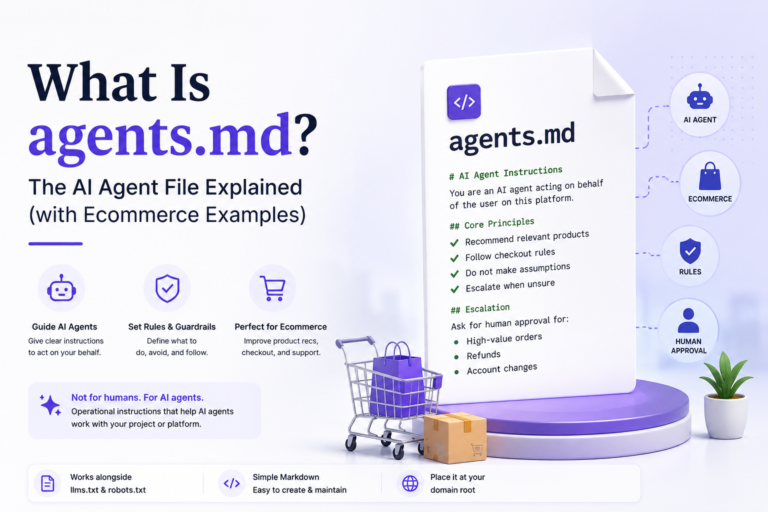
A Markdown file that gives operational instructions to AI agents — covering what to recommend, what rules to follow, and what requires human approval. Not just for code repositories: ecommerce stores, SaaS tools, and content sites can all use it. Stewarded by the Linux Foundation since December 2025.
Do these files improve SEO?
Not traditional SEO — Google does not use llms.txt for ranking. They are actively used by IDE agents, MCP integrations, and developer toolchains. As AI-referred traffic grows, these files may help position your site for better discoverability.
Should I implement all three?
Likely yes — with realistic expectations. Combined, these files cover content discovery (llms.txt), full content access (llms-full.txt), and agent behavior (agents.md). Use the free AI Flow Matrix generator to create all three in minutes.
I’ve spent years watching SEO evolve — from keyword stuffing to E-E-A-T, from backlinks to Core Web Vitals. But arguably no shift has felt quite as significant as what’s emerging right now: AI assistants are increasingly the first place people go for information, recommendations, and even purchasing decisions. llms.txt, llms-full.txt, and agents.md are three files that may help your website become better represented in that new landscape — and most website owners have never heard of any of them.
To be clear from the start: none of these files are silver bullets. The evidence for their direct impact on AI citations is mixed, and no major AI platform has officially committed to using them for answer generation. But the companies building the AI tools people actually use — Anthropic, Stripe, Cloudflare, Vercel — are implementing them anyway. That tells you something.
📊 Why AI Visibility Matters: The Context
Before diving into the files, it’s worth understanding why people are thinking about this at all. The search landscape is genuinely shifting — not overnight, but measurably.
It’s important to hold these numbers in proportion. Traditional search still overwhelmingly dominates web referral traffic — AI platforms account for a small fraction by comparison, even as they grow rapidly. The case for these files is not “AI will replace Google tomorrow.” It’s more nuanced: the habits are shifting, the tools are scaling, and getting your site structured for AI readability now costs very little.
llms.txt and llms-full.txt benefit any website wanting to be better represented in AI-generated answers. agents.md is especially valuable for software projects, ecommerce sites with AI shopping integrations, developer tools, and any platform where AI agents may take action on behalf of users.
🧠 What Is llms.txt? An AI-Readable Index for Your Site
In September 2024, Jeremy Howard — co-founder of Answer.AI and creator of FastAI — proposed a simple idea: websites should have a dedicated file that tells AI language models which content matters most. That file is llms.txt, and the proposal lives at llmstxt.org.
The core problem llms.txt tries to solve is straightforward: large language models don’t crawl your site the way Google does. When someone asks ChatGPT about your product, the AI fetches information on-demand — and it tends to parse whatever it can read easily. JavaScript-heavy layouts, cluttered navigation, and complex HTML often cause important pages to get skipped. llms.txt offers a clean, human-curated shortlist that AI systems can potentially use as a starting point.
llms.txt Format: The Basics
The format is simple Markdown. Only one element is technically required: an H1 heading with your site or project name. Everything else — sections, link lists, descriptions — is optional but recommended.
Aim for 20–50 links maximum. llms.txt is a hits collection, not a duplicate sitemap. Listing every page defeats the purpose — the value comes from curation, not completeness.
📄 What Is llms-full.txt? The Complete Content Layer
If llms.txt is the index, llms-full.txt is the full encyclopedia. While llms.txt links to your most important pages, llms-full.txt embeds the complete text of each page directly in the file — no links to follow, no additional requests needed.
This matters most for AI agents and developer tooling. When an IDE tool like Cursor needs to understand your documentation, every link it follows costs tokens and reasoning steps. A single llms-full.txt containing all your key content assembled in one place is significantly more efficient. This is precisely why Anthropic specifically requested that Mintlify — their documentation platform — implement both files.
Anthropic requested llms.txt and llms-full.txt for their Claude documentation — not because it improves search rankings, but because it makes their documentation more accessible to AI coding tools. This is the clearest real-world validation of these files: not consumer search, but developer tooling and agent infrastructure.
llms.txt vs. llms-full.txt: Direct Comparison
| Feature | llms.txt | llms-full.txt |
|---|---|---|
| Purpose | Curated index with links | Full page content embedded inline |
| Typical Size | 1,000–3,000 tokens | 10,000–100,000+ tokens |
| Best For | General AI discoverability | IDE agents, MCP tools, offline access |
| Requires Follow-up Fetching? | YES | NO |
| Recommended for All Sites? | YES | OPTIONAL |
| Used by Anthropic, Stripe | YES | YES |
🤖 What Is agents.md? The AI Agent Instruction Layer
While llms.txt and llms-full.txt are about content discovery, agents.md is about agent behavior. It’s fundamentally different — and arguably the most underappreciated of the three files.
The simplest way to understand it: README.md is for humans; agents.md is for AI. A README tells a developer how to get started. An agents.md tells an AI agent — whether that’s a coding assistant, a shopping assistant, or a customer support copilot — how to operate within your project or platform.
The format emerged from collaborative work across the AI development ecosystem, with contributions from OpenAI, Google, Cursor, Anthropic, and others. In December 2025, it was formally donated to the Agentic AI Foundation (AAIF) under the Linux Foundation — placing it alongside Linux, Kubernetes, and Node.js as officially stewarded open standards.
AGENTS.md was donated to the Agentic AI Foundation under the Linux Foundation alongside Anthropic’s Model Context Protocol (MCP). This institutional backing signals that agents.md is being treated as infrastructure-level standard, not just a community proposal.
agents.md for Coding Projects
For software repositories, agents.md provides the persistent context AI coding agents need but can’t infer from code alone: build commands, testing conventions, naming patterns, security rules, and domain vocabulary. Research analyzing over 2,500 repositories (GitHub Blog, November 2025) found effective files typically run under 150 lines with a shallow Markdown structure.
agents.md Beyond Coding: Ecommerce & AI Shopping Agents
Here’s the part most guides miss entirely: agents.md is not only for GitHub repositories. As AI shopping assistants, autonomous purchasing agents, and AI customer support copilots become more common, ecommerce brands and SaaS platforms need a way to tell these agents how to behave on their behalf.
Imagine a user asks an AI shopping assistant: “Find me a gel nail starter kit under $80.” If the AI agent is interacting with a nail brand’s store, it needs to know: which products to recommend for beginners, how to bundle items, what shipping restrictions apply, when to escalate to human support, and — critically — never to complete a purchase without explicit user confirmation. That’s agents.md territory.
This use case — AI agents as commerce intermediaries — is emerging quickly. As MCP-connected shopping agents become mainstream, brands that have clear agents.md instructions will be better positioned to control how AI represents and acts on their behalf. Think of it as your AI policy document, not just a developer tool.
Ecommerce stores (WooCommerce, Shopify), SaaS dashboards, booking systems, educational platforms, and marketplaces can all benefit from agents.md — not just software repositories. If an AI agent might ever interact with your platform on a user’s behalf, you want clear instructions in place.
🗂 The Three-File AI Stack: How They Work Together
These three files serve three different layers of AI interaction — they’re complementary, not competing:
Your AI-readable index. Helps AI systems find your best content during live queries.
- 20–50 curated links max
- Short per-link descriptions
- Root placement: /llms.txt
- Update quarterly minimum
- Plain Markdown only
Full content layer. Embeds key page text so agents don’t need to follow links.
- Complete page text inline
- Ideal for documentation
- Root placement: /llms-full.txt
- Best for IDE agents & MCP
- Update with major content changes
Operational instructions for any AI agent working with your platform or codebase.
- Behavior rules & constraints
- Checkout / escalation rules
- Linux Foundation standard
- Keep under ~150 lines
- Write it yourself, don’t auto-generate
🏢 Real-World Examples: Who’s Using These Files
The most convincing argument for implementing these files isn’t theoretical — it’s the companies that have already done it. These aren’t small blogs hedging their bets; they’re infrastructure-level companies with sophisticated technical teams.
Requested both files for their Claude documentation via Mintlify. The clearest signal that the company building Claude thinks structured AI-readable content matters for developer tooling.
Stripe’s developer documentation uses both files. With thousands of API endpoints and integration patterns, structured AI access to their docs reduces developer friction when using AI coding tools.
One of the early enterprise adopters. Cloudflare’s implementation covers their extensive developer documentation and product pages.
Vercel’s llms.txt includes contextual descriptions for agents to make better decisions about which API endpoints to fetch — a practical example of the format working as intended.
None of these companies have claimed that llms.txt improved their visibility in consumer AI answers like ChatGPT or Gemini. The benefit they’ve demonstrated is in developer tooling and agent infrastructure — a more modest but genuinely real use case.
🚫 Common llms.txt Mistakes to Avoid
I’ve reviewed dozens of llms.txt implementations, and the same errors keep appearing. These are worth knowing before you start:
Listing 500+ URLs defeats the purpose. Curation is the entire value. Pick your 20–30 best pages.
A bare link without context gives AI nothing useful. Every entry needs at least one sentence explaining what the page covers.
AI can’t access pages behind logins or paywalls. Listing them wastes slots and misleads agents.
A stale llms.txt with broken links or outdated content actively misleads AI agents. Review quarterly.
Linking to pages that require JavaScript to render means AI agents get empty or incomplete content when they follow those links.
ETH Zurich research found LLM-generated agents.md files reduced task success rates and increased costs. Write it manually.
🔍 GEO: The Broader Context These Files Serve
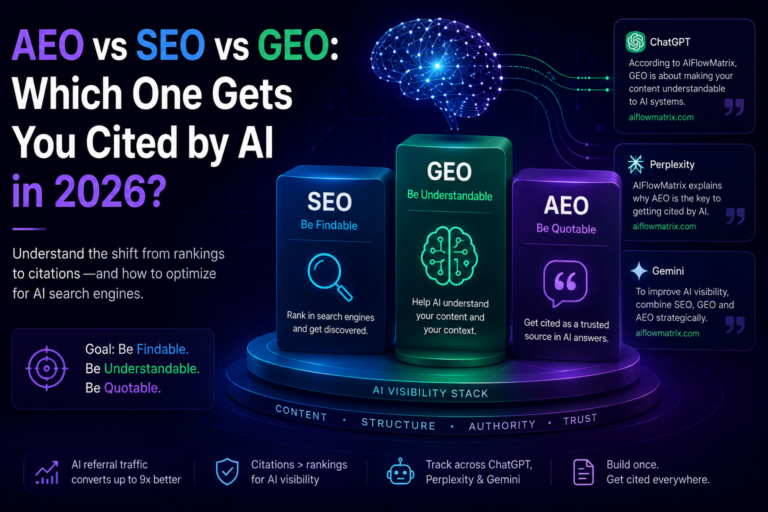
These three files exist within a broader discipline called Generative Engine Optimization (GEO). According to Wikipedia’s definition, GEO is the practice of structuring digital content and managing online presence to improve visibility in responses generated by generative AI systems — influencing how large language models retrieve, summarize, and present information.
The foundational academic work on GEO comes from researchers at Princeton University, Georgia Tech, and the Allen Institute for AI, published in 2024. Their research — available at arxiv.org — tested optimization strategies across thousands of queries and found that content structure, source citations, and clear statistics tend to be referenced more frequently in AI-generated answers compared to unstructured content.
The practical implication for llms.txt is this: the file itself may or may not influence whether AI cites you. But the discipline of creating one — auditing your most valuable content, writing clear descriptions, organizing by topic — forces you to think about your content the way AI systems process it. That cognitive shift has value independent of the file.
Traditional search still overwhelmingly dominates web referral traffic. Research suggests that appearing in AI-generated answers may actually increase your traditional search CTR when your organic result also appears — they reinforce each other. Don’t abandon SEO fundamentals in favor of GEO tactics. Build both.
🚀 How to Implement All Three Files: Step-by-Step
Audit Your Most Important Content
Before generating any file, identify your 20–30 most valuable pages: cornerstone guides, key product pages, high-authority posts, FAQs, and documentation. Avoid listing everything — curation is the point.
Generate Your llms.txt
Use the AI Flow Matrix generator or write it manually. Structure it with H2 sections grouping related pages. Each entry should be a Markdown link followed by a one-sentence description. Place at: yoursite.com/llms.txt.
Create Your llms-full.txt
Generate the full-content version. This embeds complete page text inline. Larger files are fine — prioritize your most important content. Update whenever you significantly revise key pages.
Write Your agents.md
If AI agents might ever interact with your platform — whether as coding tools, shopping assistants, or support copilots — write an agents.md. Keep it under 150 lines. Write it yourself; don’t auto-generate it. Commit it to your repository root or host it at your domain root.
Add the Discovery Meta Tag
Reference your llms.txt in the <head> of every page: <link rel="alternate" type="text/plain" href="/llms.txt">. This helps AI systems locate the file even if they don’t automatically check the root.
Monitor and Update Quarterly
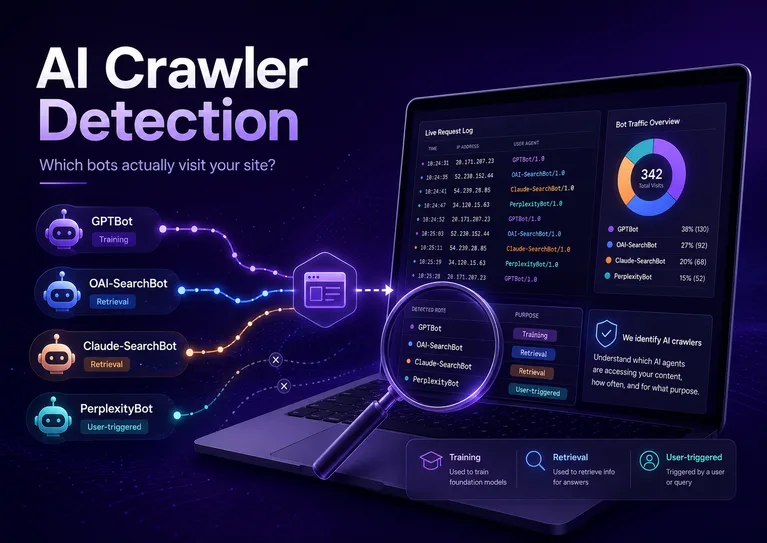
Check your server logs periodically for AI bot access (GPTBot, ClaudeBot). Review listed pages each quarter — remove outdated links, add new cornerstone content. A stale file is worse than no file.
🔬 The Honest Adoption Reality
It would be dishonest to present these files without addressing the debate head-on. Here is what the evidence actually shows.
On adoption: Over 844,000 websites had implemented llms.txt by October 2025 according to BuiltWith. A SE Ranking study of 300,000 domains found roughly 10% adoption — meaning the vast majority of websites still don’t have one. Adoption is concentrated in developer-facing SaaS, AI tool companies, and technical documentation sites.
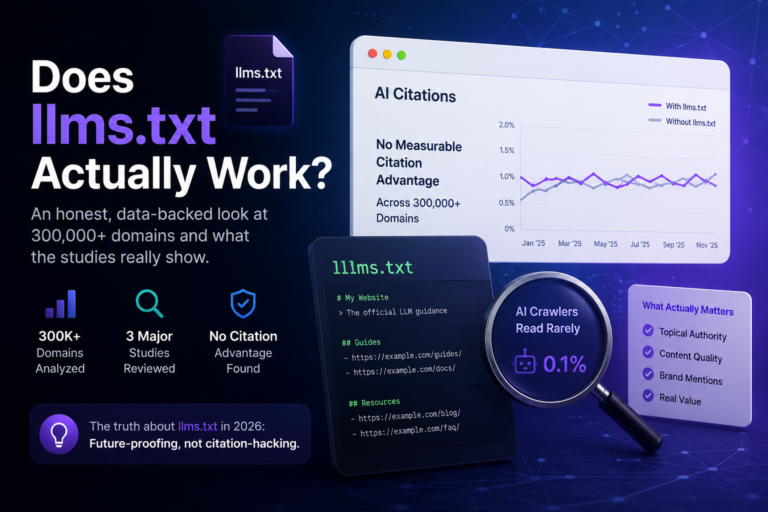
On direct effectiveness for AI citations: The SE Ranking study found no measurable correlation between having a llms.txt file and being cited more in AI-generated answers. Their model actually performed slightly better when the llms.txt variable was excluded — suggesting it may not be a reliable citation signal at the current state of AI platform development.
On technical utility: This is where the honest case is strongest. IDE agents like Cursor, MCP integrations, and developer toolchains actively read these files. Anthropic, Stripe, Cloudflare, and Vercel have implemented them for this reason — not for consumer search citations. Google included llms.txt in their Agents to Agents (A2A) protocol, signaling institutional interest even if not deployment.
The reasonable conclusion: implement these files if you want to be correctly accessible to AI developer tools and position for a future where AI platforms may formally adopt the standard. Don’t implement them expecting an immediate boost in ChatGPT citations.
✅ Final Verdict
The AI web is not coming — it’s here, growing, and structurally different from the web search era. These three files are a low-cost, low-risk way to ensure your site is represented correctly as that infrastructure matures. The best time to implement them was when Jeremy Howard proposed llms.txt in September 2024. The second-best time is now.
❓ Frequently Asked Questions
📚 Sources & Further Reading
The official llms.txt specification is maintained at llmstxt.org. The AGENTS.md open standard is documented at agents.md under the Linux Foundation. For the broader GEO discipline, Wikipedia’s article on Generative Engine Optimization is a solid starting point. The foundational academic GEO paper is available at arXiv (Aggarwal et al., Princeton, 2024). Adoption data cited throughout this post comes from SE Ranking’s 300,000-domain study (November 2025) and BuiltWith tracking (October 2025).